Call: 07971405725
 Send Inquiry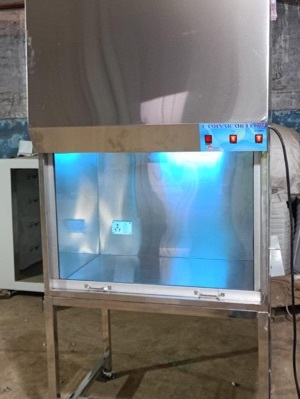
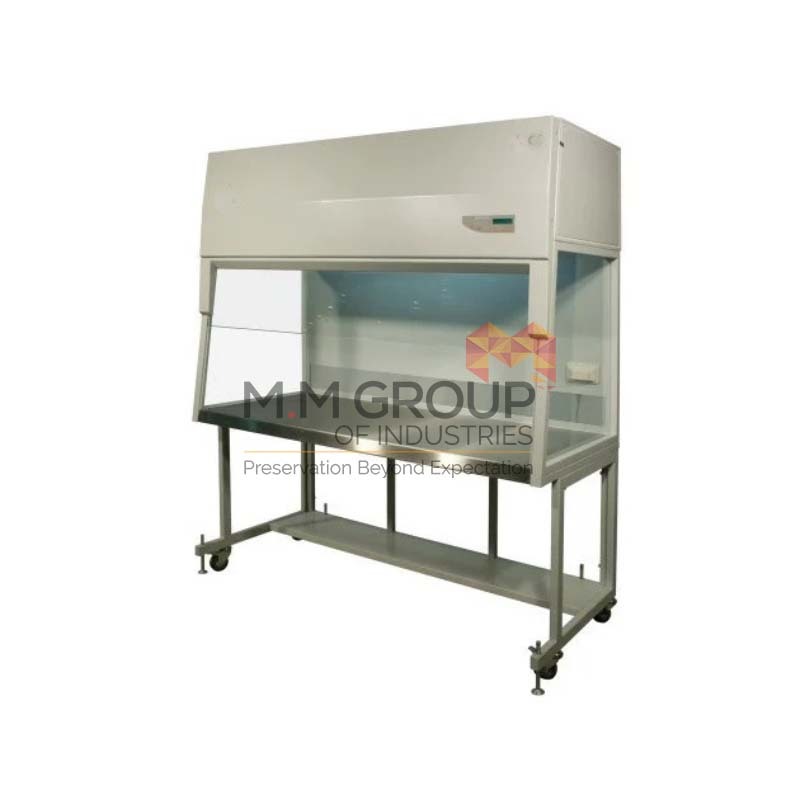
horizontal laminar air flow
75000 INR/Unit
Product Details:
- Color White
- Product Type horizontal laminar air flow
- Application Hospital
- Material Metal
- Voltage 220 Volt (v)
- Usage Laboratory
- Click to View more
X
horizontal laminar air flow Price And Quantity
- 75000 INR/Unit
- 1 Unit
horizontal laminar air flow Product Specifications
- Hospital
- Metal
- horizontal laminar air flow
- White
- 220 Volt (v)
- Laboratory
horizontal laminar air flow Trade Information
- 15 Unit Per Month
- 10 Months
Product Description
The laminar air flow cabinet operates on the principle of laminarity meaning air moves in a single direction with minimal turbulence Unlike turbulent airflow where air moves randomly and causes mixing of contaminated and clean air laminar airflow ensures that air flows in parallel layers without disruption The working process generally follows these steps 1 Air Intake The unit draws in ambient air from the surrounding environment 2 PreFiltration The incoming air first passes through a prefilter that removes larger particles such as dust and debris 3 HEPA Filtration The prefiltered air then passes through a High Efficiency Particulate Air HEPA filter which removes 9997 of particles as small as 03 microns 4 Unidirectional Airflow The filtered clean air flows uniformly across the working surface 5 Contaminant Removal Any contaminants generated inside the cabinet are immediately pushed out by the continuous airflowEfficient Contamination Control
Horizontal laminar air flow units play a crucial role in protecting lab and hospital workspaces from airborne contaminants. They deliver a steady, uniform stream of filtered air horizontally across the workstation, significantly reducing the risk of particle deposition and microbial contamination during sensitive procedures. This clean air flow is essential for sterile processing environments.
Sturdy Design and Operational Excellence
Built with sturdy metal and finished in hygienic white, these units are designed to endure frequent use in demanding hospital and laboratory settings. Operating at 220 Volts, the air flow system integrates seamlessly with existing infrastructure, offering both reliability and ease of operation. Its metal construction ensures longevity and easy maintenance.
FAQ's of horizontal laminar air flow:
Q: How does a horizontal laminar air flow unit work?
A: The horizontal laminar air flow unit draws in ambient air, filters it through HEPA filters, and directs the purified air horizontally across the workspace, creating a particle-free environment for handling sensitive samples.Q: What are the main applications of this laminar air flow in hospitals and laboratories?
A: It is primarily used in hospitals and laboratories to provide a sterile environment for procedures such as microbiological testing, preparation of sterile medicines, and surgical instrument cleaning, minimizing contamination risks.Q: When should I use a horizontal laminar air flow system instead of a vertical one?
A: A horizontal system is preferred when direct airflow away from the operator is needed, typically to protect both work and personnel from airborne particles, making it suitable for sensitive laboratory and hospital tasks.Q: Where is this laminar air flow unit manufactured and supplied from?
A: This unit is manufactured and supplied in India by reputable companies specializing in laboratory and hospital equipment, ensuring adherence to quality and safety standards.Q: What is the process for installing the unit in a laboratory or hospital setting?
A: Installation involves placing the unit in a clean, flat area, connecting it to a 220 Volt power supply, and ensuring that airflow direction and ventilation are unobstructed for optimal performance.Q: How is the unit maintained for consistent performance?
A: Regular maintenance includes inspecting and replacing HEPA filters as necessary, cleaning the metal surfaces, and ensuring that the airflow remains unblocked and consistent throughout operations.Q: What are the benefits of using this horizontal laminar air flow for laboratory and medical applications?
A: The main benefits include providing a sterile, contaminant-free environment, protecting both samples and staff, enhancing the reliability of experimental results, and ensuring adherence to health and safety regulations.Tell us about your requirement

Price:
Quantity
Select Unit
- 50
- 100
- 200
- 250
- 500
- 1000+
Additional detail
Mobile number
Email

Other Products in 'Pharmaceutical Product' category

Contact Details
M.M GROUP OF INDUSTRIES
GST : 06CLWPB6605F2Z1
- Plot No 5, East Patel Nagar, Near Industrial Area, Kardhan Road, Cantt, Ambala - 133001, Haryana, India
- Phone :07971405725
 Send Inquiry
Developed and Managed by Infocom Network Private Limited.
 English
 Spanish
 French
 German
 Italian
 Chinese (Simplified)
 Japanese
 Korean
 Arabic
 Portuguese